Monday, October 25, 2010

How We Use Our Treasure


An Inkling
Anyone who has ever tried to line up stewardship speakers knows how hard it is to find someone who believes she or he has something worthwhile to say about stewardship.  So this year we’re conducting an experiment:  I’m doing some “man on the street” interviews (actually, interviews of anyone who drops by my office!), and I’m asking them to reflect on what they have learned along the way about stewardship.  I’ve found that what people say off the tops of their heads often reflects what’s in the bottom of their hearts.  And as you’ll see, most folks know more about stewardship than they give themselves credit for.
This is the video we showed in worship this week for the Stewardship of Treasure.
Enjoy!
Keith

Wednesday, October 20, 2010

How We Use Our Talents


An Inkling
Anyone who has ever tried to line up stewardship speakers knows how hard it is to find someone who believes she or he has something worthwhile to say about stewardship.  So this year we’re conducting an experiment:  I’m doing some “man on the street” interviews (actually, interviews of anyone who drops by my office!), and I’m asking them to reflect on what they have learned along the way about stewardship.  I’ve found that what people say off the tops of their heads often reflects what’s in the bottom of their hearts.  And as you’ll see, most folks know more about stewardship than they give themselves credit for.
This is the video we showed in worship this week for the Stewardship of Talents.
Enjoy!
Keith


Thursday, October 14, 2010

How We Use Our Time


An Inkling
Anyone who has ever tried to line up stewardship speakers knows how hard it is to find someone who believes she or he has something worthwhile to say about stewardship.  So this year we’re conducting an experiment:  I’m doing some “man on the street” interviews (actually, interviews of anyone who drops by my office!), and I’m asking them to reflect on what they have learned along the way about stewardship.  I’ve found that what people say off the tops of their heads often reflects what’s in the bottom of their hearts.  And as you’ll see, most folks know more about stewardship than they give themselves credit for.
This is the video we showed in worship this week for Stewardship of Time.
Enjoy!
Keith

Monday, September 27, 2010

Touchdown?


An Inkling
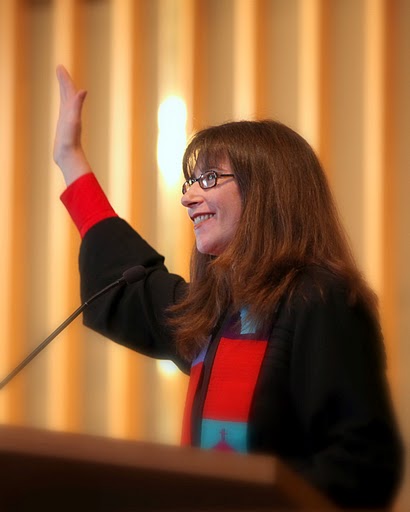
Ellen Andrusia reported a fun conversation with her five year old grand-daughter, Ellie, who visited our worship service with her grandmother, and then asked, “Why do people raise their hands in your church?”  Ellen answered, “They are worshiping the Lord.”  To which Ellie replied, “That also means touchdown!”
Isn’t it funny how what we’ve been exposed to shapes our perceptions?  Football as a grid for understanding worship – how American is that?!  And it’s not just children who bring a grid with them to worship.  We all bring our interpretive frameworks. 
I was reminded of this Sunday, when we had a lot of guests with us for Rowan Keyser’s baptism.  Some of them, coming from more reserved traditions, were surprised by how many “touchdowns” we score here at St. Giles!  And there were some other stadium trappings – clapping, and a few shouts – that caught their attention. 
Our “Contemporary” service tends to be more expressive than our “Traditional” service.  However, as Presbyterian services typically go, our Traditional service is also more expressive than people expect.  That service scores some touchdowns too!  Of course, if our guests come from a Pentecostal church, they’ll find even our Contemporary service to be pretty buttoned down.  We all have our grids.
So which is the right way to worship – expressive or reflective, standard Presbyterian or St. Giles or Pentecostal?  Wrong question.  For the One we worship delights in the variety of expression.  And we all do well to learn from each other, so that we might make his praise all the more glorious.
Blessings,
Keith

Monday, September 20, 2010

Why a Woman?


An Inkling
In this lull time between having called Sarah Marsh to be our new Associate Pastor, and her arrival here (mid-October), I thought I’d offer a brief reflection on women ministers.  Even though St. Giles has not called its own woman pastor before, for most of us women ministers are no longer a novelty.  The Presbyterian Church ordained its first woman elder 80 years ago, and its first woman minister 54 years ago.  Yet what seems simply right to us now did not seem so with our forebears, nor does it with many of our friends in other churches.  They cite various Pauline statements about women and ask, “How can you do that and take the Bible seriously?”  Good question.
Our church changed its mind not by setting the Bible aside, but by reading it more carefully.  Having seen women effectively “eld” before they could be “Elders” and “pastor” before they could be “Pastors,” the church re-read the scriptures with a renewed determination to understand God’s plan for women’s roles.
Whole books have been written about the interpretive quandaries caused by seemingly contradictory passages.  I can’t deal with all of that in a blog.  But I will simply lift up some passages that helped the church recognize women’s broad roles.  Genesis 1-3 shows how God created men and women equally in his image, and that it was sin, not God’s design, that put men and women at odds.  Jesus chose women as the first heralds of the best news ever:  his resurrection.  So they were apostles to the apostles!  Paul summed up the impact of Christ on human divisions:  There is no longer Jew or Greek, slave or free, male and female; for all of you are one in Christ Jesus. 
By putting such passages alongside restrictive passages, the church saw that the overall trajectory of the Bible’s teaching supports equal roles for women and men, even while recognizing the God-given distinctives of the genders.  In that light, the restrictive passages are seen as directions for particular places where women had misused their new God-given freedoms.
I’m glad the church took a second look, for we are now richly blessed by the gifts God brings through women elders and ministers.  With Sarah’s arrival, we’ll witness the fruit of that second look in a new way in our own midst!  Seeing with our own eyes helps, but we must also be clear from the Bible itself why we believe women should take these roles.  Such clarity brings encouragement to our women, who must still sort out the claims of some churches that women don’t belong in such roles. 
Let’s be ready to launch Sarah well in her ministry here.  And you might find one of our women elders and speak a word of encouragement to her too!
Blessings,
Keith

Tuesday, September 14, 2010

The Landscape of the Soul


An Inkling
One of the delightful passages in The Shack describes Mac (the main character) working in a garden with Sarayu (the Holy Spirit’s name in this fantasy of divine encounter).  As they work the garden, removing briars, digging roots, planting flowers, etc, they talk about many things, including the gardening work itself.  But it’s only at the end of their gardening work that Sarayu reveals that the garden they were working is really Mac’s soul – still with much work needed, but already showing an emerging beauty.
I was reminded of this when I was visiting with Jonathan Keyser about his beloved hobby, landscaping.  Thankfully he has plied his passion with some beds around the church.  You can see the attached before and after pictures of the back entrance.  How’s that for an amazing transformation?!  Not overnight, but over time, and with a lot of work on his part, Jonathan’s vision of beautiful possibilities has taken root and grown.
On several occasions I’ve talked with Jonathan about what could be done with a particular patch of ground.  I have no landscaper’s eye, and so I imagine some grass and a few flowers, at best.  But Jonathan sees possibilities beyond my imagining – grand visions of variety and beauty, tailored to grow in a particular place.  As he describes it, his eyes light up with excitement, for he’s already seeing a beauty that’s not yet grown to be. 
I have to believe that the Holy Spirit’s eyes light up as well when he surveys the gardens of our souls.  Weeds and briars don’t stifle his wild and wonderful imaginings for us.  With an ever-ready supply of water, and perfect timing for planting and pruning, he beautifies us.  I’ve seen some of his beautiful vision taking form in you.  Won’t it be fun to see his dream come to full realization?!  And in the meantime, we get to be his partners in the gardening.  Good company, and a meaningful task – what a deal!
Here’s to Jonathan,
Keith

Tuesday, September 7, 2010

Life Weavers


An Inkling
My art education has been remedial.  I had little instruction as a youngster, and thus I am trying to fill in those gaps as an adult.  One art genre that has fascinated me is the tapestry.  Thousands of threads are woven to tell a story.  They may show a single scene, like Raphael’s picture of the miraculous catch of fish.  Or they may tell a longer story.  For example, the Prestopans Tapestry takes 104 meters to tell the story of the 1745 Battle of Prestopans!
In a tapestry, no one thread tells the tale.  But all the threads together can portray an elaborate scene, or recount a whole history.
You are a tapestry artist.  All but a few of us shy away from the title “artist,” but it’s true.  You are continually weaving threads that make up the tapestry of your life.  Particular threads may not seem of much import, say for example the way you do your meals, converse on the phone, or use your time in the evening.  But they become part of the larger portrayal of something quite grand – your life.  Everything gets woven in, both your best and worst.  And thankfully, God weaves his gracious and glorious threads into our tapestries too. 
It’s well to step back sometimes and ask, “What tale is my tapestry telling?”  I was put to thinking about this most recently when Sarah broke her ankle a week ago at the church picnic.  We heard a couple of days later that three little boys, Mikey, Sam, and James, had gone into one of the Sunday School rooms and prayed for her while we awaited the ambulance.  No one told them to.  They just did it.  How did they know to do that?
At this point in their lives, their tapestries are still very much interwoven with those of their parents.  Prayer must be woven right into the scenes of their everyday family life.  Thus it seemed natural to the boys to pray in an emergency.  Now, even at a young age, they are weaving such threads into their own tapestries – to the glory of God!
How’s that for a masterpiece?!
Blessings,
Keith

Monday, August 30, 2010

A Hint of Good Things to Come...


An Inkling
This week’s offering is an attached You Tube video that we used to introduce our soon-to-be Associate Pastor, Sarah Marsh, to everyone at Sunday’s congregational meeting. The Search Team shared their enthusiasm for Sarah, but the congregation also got a feel for Sarah through having her speak for herself.
We thank God for his guidance through this search! If it’s like most things with God, he’s given us a hint of the good things he has in store – but only a hint.
Heeeere’s Sarah…
Keith

Tuesday, August 24, 2010

The God of Heaven and Mirth


An Inkling
Last weekend Sarah and I took in “Laugh Your Way to a Better Marriage,” a marriage conference led by Mark Gungor.  It’s aptly named.  I’m one of those who cries when I laugh hard, and by the time we left I needed to wring out my handkerchief.
Mark has a marvelous comic gift, and of course marriage has no shortage of funny subjects, nor of hard truths that need to be spoken.  So Mark uses humor like Mary Poppins’ “spoon full of sugar that helps the medicine go down.” 
But I think it’s more than that.  There’s something about truth itself that sounds of mirth.  That’s because the One who gives truth – indeed, who is the truth – is also mirth-full.  And we are made in his mirthful image!
Sadly, along with every other facet of God’s image in us, our mirth has been distorted by sin.  And so the heavenly laughter of delight gets twisted into a demeaning laughter of scorn.  Witness much of the humor in our culture, which derides and puts others down, pulling us all down in the process.  The humor of hell will be such a downer – forever.  But God’s kind of humor, even if the occasion is our own foibles and foolishness, lifts us up. 
Which reminds me again of Mary Poppins.  Do you remember Uncle Albert’s song, “I Love to Laugh”?  (Here’s the link -  http://www.youtube.com/watch?v=gx7lz5X2vKk )  The more they laugh, the higher they float, which only increases the laughter.  Such will be the mirth of heaven, as we are all lifted up in the Lord’s joy.
Thanks be to God, that in Jesus Christ he redeems even our mirth!
Ha, ha, ha-lelujah!
Keith

Tuesday, August 17, 2010

Marriage Matters


An Inkling
Marriage was much on the mind last week as our extended family vacationed together at the lake.  One evening we celebrated three August anniversaries with a cake.  Numerous conversations anticipated Dorothy and Brandon’s October wedding, as I helped plan their service, and Sarah helped plan reception details, etc.  Then over the weekend my cousin, Tracey, remarried.  Rob is a gift to her in this season of life, and I know she is a gift to him.  So in a single week our family saw marriage anticipated, commenced anew, and celebrated.
We also saw marriage debated every time we turned on the news.  Our culture is entangled in a complex debate about the nature of marriage, using only the language of constitutional guarantees and individual rights.  Good luck with that! 
Marriage, as a gift of God, cannot be understood with legal paradigms alone.  We Christians have the challenge of adding our scripturally informed perspective to the cultural conversation – no simple undertaking in a nation that favors no one faith.
If we’re to gain a hearing, we must speak the truth in love.  It’s the love that wins a hearing for the truth.  We must also speak with humility.  It’s not as if we Christians either fully understand or perfectly practice marriage ourselves.  Witness the many broken marriages in the church.  And we must speak with grace, the very grace which gives promise to our marriages.
Might God use us to re-establish a biblically based understanding of marriage in our land?  I hope and pray so.  And in the meantime we can seek to live such marriages in our homes – to his glory and our joy.
Here’s to my bride!
Keith

Tuesday, August 3, 2010

Sanity on Display


An Inkling
Sanity landed in the church house this week.  It’s down the hall from my office.  Actually, it doesn’t look like sanity – it’s noisy, chaotic, and fun.  It’s Vacation Bible School.
In contrast my office looks sane.  It’s certainly purposive.  The books are organized by category, with indexing that helps with sermons.  I have a calendar, a to do list, and a computer connected to a world of information.  In the quiet of my office, I can crank out the work.  Not so down the hall – at least not the office kind of work.
Jesus said, “Unless you come as a child, you’ll never enter the Kingdom.”  He spoke that word to adults who were purposive, who accomplished things.  Organizing life to accomplish worthy goals is a good thing.  But apparently, when it comes to entering the Kingdom, it’s not the key. 
Not everyone down the hall is a child.  There are a good many adults and teens serving in various roles.  For some tasks at church, it’s hard to get enough volunteers.  Not so VBS – plenty show up to help.  And these are people with organized lives, who accomplish things in their own realms.
What’s the draw?  I think it’s the different kind of sanity, on display as our children encounter Jesus.  Their simple responsiveness to his love and life displays the sanity of the Kingdom in ways that our ordered lives cannot.  It’s refreshing.  It breathes life back into the ordered patterns of adult living.  And it cannot be manufactured, no matter how well organized and purposive one is.  Kingdom life comes only as a gift.
Thanks, kids!
Keith

Tuesday, July 27, 2010

The Real Business, a la Robert's Rules


An Inkling
“Madam Moderator, I move Jesus.  And if I get a second, I’d like to speak to it.”
“Second!”
“You've heard the motion.  Now it is time for debate.  The maker of the motion has the privilege of speaking first.”
“Madam Moderator, members of the assembly:  it is my deepest hope that you will adopt this motion.  Heaven knows we’ve got problems:  sin and sickness, poverty and hunger, war and death.  Each generation has fancied itself the one to solve these problems.  Politicians, kings, and scientists have led some amazing efforts, and at times the prospects have looked promising.  But even our best efforts of have proven to be transient in effect.  We cannot save ourselves.  Thus we need one who can break the power of sin and death, and who can usher in a new era of peace and wholeness.  There is but one who can do it:  Jesus.  Thus I urge you, for your own sake, and for the sake of the whole world, to vote for this motion.”
“Are there others who would like to speak to this motion?”
“Madam Moderator, I would like to offer a substitute motion.”
“Madam, substitute motions are usually in order, but in this case it is out of order because there is no adequate sub­stitute for the original motion.”
“Madam Moderator, I would like to offer an amendment to the motion.”
“Sir, amendments are usually in order, but in this case it is out of order because no amendment can improve upon the original motion.”
“Madam Moderator, I move that we table the motion until a more advantageous time to decide.”
“Sir, a motion to table is usually in order, but in this case it is out of order because you have no guarantee that you will have another opportunity to decide.  Members of the assembly:  are you ready to vote?  All in favor of Jesus say ‘Aye!’”
Cast your vote now,
Keith

Tuesday, July 20, 2010

Perspective Via Prayer Request


An Inkling
God is never without the means to lend perspective. 
I was sitting here pondering on our larger church, and thinking about how to follow up on my last post, when into my in box popped a prayer request from a missionary doctor friend who lives in a Muslim nation.  He faithfully sends these prayers each week, requesting that we join him in prayer.  Typically they arrive Tuesday morning, and each time they provide an opportunity for me to recalculate just how “huge” my worry du jour really is.
Here’s this week’s prayer request, with place identifiers removed:
God of mercy, who forgets not the poor and oppressed, we pray for Nupur, a 14-year-old tenth-grader who lives with her family of six in a one-room slum dwelling on the _____ side of _____.  She dreams of attending college.  Her father, an unemployed drug addict, beats her mother to demand the $2 a day she earns unloading sand from boats on the _____ River.  Lord, with your mighty hand break the bonds of poverty and oppression that grip Nupur's family, ease the pain she has felt watching her mother be beaten, and help her realize her dream of higher education.  We pray in the name of Jesus Christ, who taught us that in faith all things are possible.  Amen.
Hmmm.  And I was worrying about what will become of our denomination as an institution…  Thanks be to God for his regular reminders about what matters.
Which is not to say that the Presbyterian Church (U.S.A.) doesn’t matter.  For one thing, that’s the part of God’s larger church that supports my friend in his service.  If the church unravels, lots of important missions will get rocked.
But the basic issues in contention, sexual ethics and the uniqueness of salvation in Jesus Christ, matter for another reason too:  they impact the well-being and witness of Christians in such lands.  Many Muslims never give the gospel a chance because they associate it with the sexual chaos of western societies, which they see as Christian lands.  We would protest that our faith can’t be judged by our nation, but that is their perception.  And they are very clear that if the Koran is right about the divine, then we are not.  Historic and global Christianity would rightly want to add, “and vice versa.”  So for the gospel even to get a hearing, and then for us to have some clarity in that conversation, these basic issues matter – a lot.
But here’s what matters most:  these ongoing contentions not only threaten the institutional viability of our denomination, they threaten the possibility that we might have the privilege of bringing the best of all good news to Nupur.  So I continue to pray for our sick ol’ mother church.
And I do so with gratitude to God for the perspective he provides on what is most important – Nupur, and millions like her.
Pray for Nupur,
Keith

Tuesday, July 13, 2010

Essentials, Non-essentials, and Charity Amiss


An Inkling
I’m still processing our church’s General Assembly last week.  I wrote twice from the midst of the Assembly, and now I write in reflection.  Distance is beginning to lend perspective.
It’s a well-known maxim:  In essentials, unity; in non-essentials, liberty; in all things, charity.  I’ve seen it attributed both to St. Augustine and John Wesley.  Whoever coined it, many have found it a wise word for how to make life work in the church.
I wish it were true of the Presbyterian Church (U.S.A.).  At points in our history it has been.  But for now here is what we’re trying to make work:  In essentials, liberty; in non-essentials, unity; and in all things (except church property), charity.
Let’s start with non-essentials.  General Assembly wasn’t all business.  There were also plenty of occasions to talk shop with other pastors and elders.  We have so much in common in education and ethos.  We face many of the same organizational challenges in our congregations and presbyteries, and we try many of the same innovations.  I had several instructive and satisfying conversations about such non-essentials with people who are opponents on our most contended issues.  Camaraderie came easily on non-essentials.  It almost felt like unity.
Then there are the essentials.  We are clearly on divergent paths.  I say “clearly,” but not all would agree.  Some say there is room for liberty here, and that we can disagree and still walk together.  The matters about which we primarily contend are sexual ethics and the uniqueness of salvation in Christ.  (There is much more to say about each of these, but that will have to await additional blogs.)
Here’s the short of it:  those who want to revise the historic Christian sexual ethic say agreement is not essential.  And those who would recast salvation in Christ as being one of several salvation paths believe that even divergent paths are ultimately the same path.  Those who hold to the historic beliefs in these areas say that they are essential, along with about 99% of the global church.  I agree.  And to indulge ourselves in the fantasy that we can continue as a denomination with liberty on matters so close to the center of our faith and practice is denial on steroids.
Then there’s the matter of charity.  We’ve congratulated ourselves at length about how polite we were to each other at General Assembly, and for the most part we were.  That is to the good.  Where we seem not to be doing so well is in the presbyteries where some congregations have decided they must leave.  What is it about “who gets the property” that tilts otherwise charitable Christians toward mean-spirited actions?  Whoever gets the property, both sides lose in these cases, and the Lord is dishonored.
When the church has unity in essentials, she can handle an amazing amount of liberty in non-essentials, and charity comes as a bonus.  But right now the PCUSA is trying to live outside that pattern.  It won’t work.  It can’t work.
What will happen?  Either God will move to restore our unity in essentials, or there will be some sort of split.  I pray for the former and dread the latter.  Without a miracle, I believe the latter is inevitable.  God has done miracles in the life of his church before.  Maybe he will again.  We’ll see.
It’s a good thing Jesus saves – even the church.
Lord have mercy,
Keith

Sunday, July 4, 2010

Bring on the Coal


An Inkling
Woe is me.  For I am a man of unclean lips, and I dwell in the midst of a people of unclean lips.
So prayed Isaiah when he found himself in the very presence of Almighty God (Is. 6:5).  It was and is a good prayer for a person like me who lives in the midst of a people like us.
I did today what I have done most years when I’ve been at General Assembly on Sunday – I skipped the official General Assembly worship service and found another.
Back in 1990, when I started going to Assemblies, I attended these services.  Their size is always impressive, for most of the Presbyterian congregations in the area join in the service.  You can also be sure that the service and its music will be planned with great care.  But after four or five years of this, and realizing that I left the service depressed each time, I decided for the sake of my own weak spirit that I had better find an alternative. 
Most often I have found a local congregation where I knew the worship would be distinct from the Assembly worship, i.e., one where I knew that the preaching would not likely denature the gospel, where the liturgy would not be more concerned with the odd standards for non-sexist language* than it was with honoring God, and where we would not spend the whole service congratulating ourselves on how diverse we are.**
Usually I’ve found a local congregation of Presbyterian flavor that was having its own service.  Once I attended an Orthodox Church across the street from the convention center.  This time I could find no ready local church option, so I went to a gathering of about forty friends in a hotel meeting room, all of whom had decided for reasons similar to my own, that they would do better to have their own service.
It was both wonderful and sad.  It was a wonderfully unself-conscious time of worship.  Language was unguarded, natural, and affectionate toward God.  Prayers for each other and the larger church flowed from the heart.  The songs were mostly a capella, but they were heart-felt and God-honoring.
I didn’t leave depressed, as I often have from the Assembly services.  Nonetheless, there was a sadness too, as I realized that I was in a part of the body of Christ that felt the need to worship separately from the larger part of that body.  We thereby gave expression in our worship to the very sort of divisions that mark us as a church these days.  Lord have mercy.
Or better yet, Woe is me.  For I am a man of unclean lips, and I dwell in the midst of a people of unclean lips.  Lord, bring on the coal (Is. 6:6-7).
And start with me,
Keith
* For those unacquainted with these “standards,” they are such things as: 
  • It’s better to jump through all sorts of grammar hoops, thereby rendering the liturgy into clownish English, than it is to use the common biblical pronoun for God, “he.”
  • It’s okay to make rare use of the name by which Jesus frequently addressed God, “Father,” so long as it is “balanced” with a parallel reference to “Mother.”
  • But it is better to avoid “Father” altogether lest someone think that the one who wrote the prayer is ignorant of the “standards.”
  • Etc.  (Lots of etc’s.)
** This one is even harder to explain than the “standards.”  God’s Kingdom is diverse, and the less diverse a church, the paler it’s representation of the Kingdom.  But when the church in worship is more focused on its own diversity than it is on the One whose gracious presence can gather an amazing diversity, which is what I’ve found in most Assembly worship services, then worship devolves into mere corporate religious narcissism – not a pretty sight.